


Not sure where to start?
Tell us what you are looking for. Our specialists will review your request and suggest the right clinic for you.
Yes. Stem cell therapy is legal in the UAE in licensed facilities, and in Dubai the Dubai Health Authority (DHA) standard ST-68, in force since 28 February 2026, sets how licensed clinics provide it: facility licensing, an accredited GMP laboratory, registered products, written consent and follow-up. Same-day procedures with your own cells, such as SVF from fat, PRP, microfat and bone marrow concentrate, are routine care in Dubai.
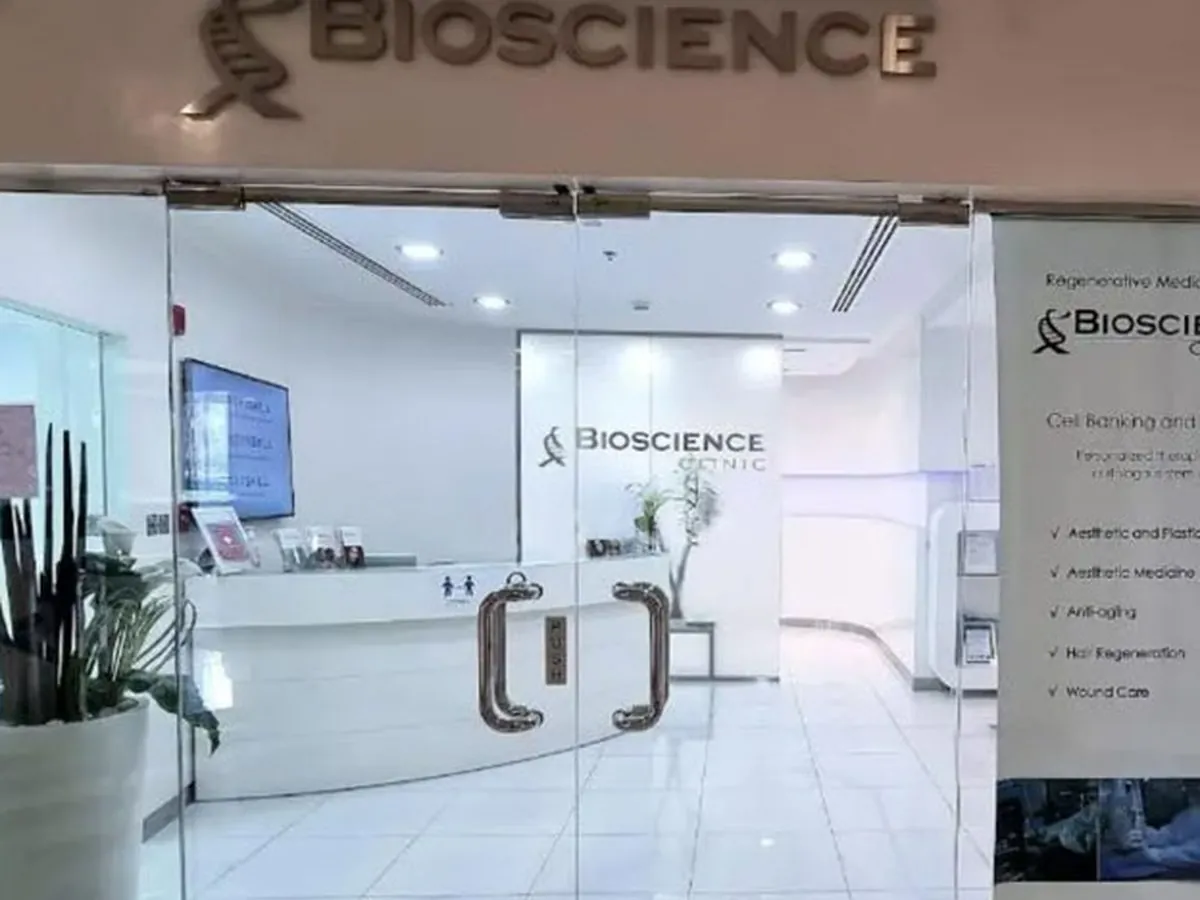
Whether a specific treatment suits you depends on the procedure, the product, the facility's licence and your doctor's assessment. For the treatments themselves, see our overview of stem cell therapy in Dubai. This guide is written by Bioscience Institute, which has run GMP-certified cell laboratories since 2007 and has a clinic and cell factory in Dubai Healthcare City.
The UAE stem cell rules in plain words
Stem cell therapy in the UAE is regulated at two levels: federal law, which covers medical products, biobanks and research across the country, and the health authority of each emirate, which licenses facilities and doctors and sets clinical standards.
Federal Decree-Law 38/2024 on medical products
In force since 2 January 2025, the Decree-Law treats stem cell therapy as an "advanced medical treatment product" and brings these products, biobanks and clinical research under one federal law. The Emirates Drug Establishment (EDE) applies it: since 29 December 2025 EDE has handled product registration, permits and GMP certification, tasks previously carried out by the Ministry of Health and Prevention (MOHAP), and advertising for medical products goes through EDE approval.
DHA standard ST-68: Standards for Stem Cell Services
DHA issued ST-68 on 31 December 2025 and it took effect on 28 February 2026, replacing the 2025 Standards for Stem Cells and Regenerative Medicine. It applies to every DHA-licensed facility that treats patients or processes, manufactures or stores cells, and it sets how they work: a facility licence for stem cell services, treatment within the facility's licensed specialty, an accredited GMP laboratory for cell processing, registered advanced therapy products, written informed consent and a follow-up plan.
The other emirates and the free zone
Abu Dhabi's Department of Health (DoH) has its own stem cell standard, the Northern Emirates fall under federal licensing by MOHAP, and Dubai Healthcare City has its own regulator. Each is covered in more detail below.
Who regulates stem cell therapy in the UAE, and how to check
The regulator depends on where the clinic is. This table shows who oversees what and the quickest way to check it before you book.
| Regulator | Where | What it oversees | How you can check |
|---|---|---|---|
| Dubai Health Authority (DHA) | Dubai | Licences for facilities and doctors; ST-68 for stem cell services; health advertising on social media | Search the facility and the doctor in DHA's Sheryan portal |
| Dubai Healthcare City regulator (DHCR) | Dubai Healthcare City free zone | Licences for facilities and professionals inside the free zone; its own research regulation; approval of health adverts | Ask the clinic for its DHCC licence number and check it with DHCR |
| Department of Health (DoH) | Abu Dhabi | Licences for facilities and doctors; the DoH stem cell standard and research guideline | Ask for the DoH facility and doctor licence numbers |
| Ministry of Health and Prevention (MOHAP) and Emirates Health Services | Northern Emirates | Federal licensing of facilities and professionals | Ask for the MOHAP licence numbers |
| Emirates Drug Establishment (EDE) | The whole country | Medical products, including advanced therapy products; GMP certification; advertising of medical products | Ask for the GMP certificate of the laboratory that prepares the cells and the registration of the product used |
Which stem cell procedures are routine care in Dubai?
Same-day autologous procedures are routine care in Dubai: treatments that use your own tissue, processed with minimal manipulation and returned to you in the same session. ST-68 names mechanically processed stromal vascular fraction (SVF) from fat, platelet-rich plasma (PRP) and platelet-rich fibrin (PRF), microfat grafting and bone marrow aspirate concentrate (BMAC).
These procedures belong to approved specialties: plastic and reconstructive surgery (fat-graft enrichment, wound and soft-tissue repair), orthopaedics (localised osteoarthritis and cartilage injury with same-day SVF), pain medicine, physical medicine and rehabilitation, and peripheral nerve care. Haematopoietic stem cell transplants for blood diseases remain established haematology.
DHA's inspection checklist for adipose-derived cells describes how a same-day procedure is done: the cells are used as harvested, without culture or added growth factors, never mixed with cord blood or other cells, never pooled between patients, and given only to the person the tissue came from. If you are weighing these options for a joint, our guides to stem cell therapy for knees and stem cells vs PRP explain the differences.
For a plan that goes beyond a same-day procedure, such as cells expanded in a laboratory, donor cells or exosomes, the deciding factors are the product, the laboratory that prepares it, the facility's licence and the doctor's assessment of your condition. Our specialists review your request and suggest the right clinic for you.
Do the same rules apply to medical tourists?
Yes. The rules attach to the facility and the procedure, not to your passport. Visitors follow the same path as residents: a medical assessment, a written plan, written consent and a follow-up schedule agreed before treatment.
How a licensed stem cell procedure works, step by step
A licensed same-day procedure follows a set path, and knowing it helps you judge any offer before you agree to it.
- Consultation and assessment. A licensed specialist reviews your history and goals, examines you and, for a joint, looks at recent imaging such as an MRI.
- Written plan and consent. You receive the plan, the alternatives, the risks and the price in writing, with time to read the consent form before you sign it.
- Harvest. A blood draw for PRP, a small liposuction under local anaesthesia for fat-derived cells, or a bone marrow aspiration for bone marrow concentrate.
- Processing. The tissue is processed in the same session and stays labelled and traceable to you from harvest to injection.
- Injection. The preparation goes back into the treated area; joint injections are usually guided by ultrasound.
- Follow-up. Review visits at agreed dates, rehabilitation for joints and a direct contact in case of side effects.
The usual side effects are those of any injection or small fat harvest: temporary swelling, tenderness or bruising at the treated sites. Our comparison of exosomes vs stem cells explains how cell-free products differ from cells.
Exosome treatments in the UAE: what to check
For exosome treatments, the deciding factor is the product: where the exosomes come from, which laboratory made them, whether the product is registered for the proposed use and how each batch was tested for sterility and endotoxins. Exosome skincare without medical claims, used at home, follows cosmetics rules.
A clinic should be able to name the product and show its documentation, and the doctor should explain why it suits your skin, hair or joints. Our specialists review your request and suggest the right clinic for you. Our exosome therapy guide and exosomes vs PRP comparison cover the science.
Abu Dhabi, the Northern Emirates and Dubai Healthcare City
Abu Dhabi
Abu Dhabi follows the DoH stem cell standard and the DoH research guideline (version 1.2, effective August 2024). Facilities and doctors are licensed by DoH, established treatments such as stem cell transplants are part of routine care, and the DoH research committee (ADHRTC) reviews new cell therapy protocols.
The Northern Emirates
Facilities are licensed federally by MOHAP and Emirates Health Services, and the federal Decree-Law and the EDE rules for medical products apply.
Dubai Healthcare City
Facilities inside Dubai Healthcare City (DHCC) are licensed by the free zone's own regulator (DHCR), which has its own research regulation and approves health adverts. Ask any DHCC clinic which regulator licenses it and which standard it follows for your procedure.
How do you check a stem cell clinic's licence in the UAE?
Check the licence before you compare prices; licensed facilities and doctors can be looked up in minutes.
- Find the regulator. Dubai facilities are licensed by DHA, Dubai Healthcare City facilities by DHCR, Abu Dhabi facilities by DoH and the Northern Emirates by MOHAP.
- Search the register. In Dubai, DHA's Sheryan portal lets you search licensed professionals and facilities. Check that the doctor's licensed title fits the procedure.
- Ask exactly what will be used. Your own cells or a product, prepared the same day or in a laboratory, and in what dose: a good clinic puts it in writing.
- Ask who processes the cells. ST-68 requires clinics to work with an accredited GMP laboratory and to use registered advanced therapy products, so ask for the laboratory's name and its GMP certificate.
- Ask for consent and follow-up in writing. A consent form you can take home and a follow-up plan with dates are part of licensed care.
- Read the advert. DHA's 2026 social media standard keeps words such as "best", "only", "100%", "guaranteed" and "miracle" out of health adverts. An advert that uses them tells you how the clinic treats other rules.
The International Society for Stem Cell Research (ISSCR) publishes a patient guide with similar questions. See also how to choose a stem cell clinic in Dubai (ten checks) and stem cell therapy cost in Dubai.
Is stem cell banking legal in the UAE?
Yes. Cord blood, cord tissue and adipose stem cell banking is legal in the UAE under licence: biobanks are licensed under Federal Decree-Law 38/2024, and a federal Higher Committee for Umbilical Cord Blood and Stem Cells oversees the sector.
When you compare banks, look at what is stored (cord blood, cord tissue or both), what the processing fee covers, whether storage is charged yearly or prepaid, and whether the company that signs the contract also owns the laboratory. Our page on cord blood and cord tissue banking costs explains what each fee covers.
FAQ
Are stem cells legal in Dubai?
Yes, in DHA-licensed facilities. Same-day procedures with your own cells, such as SVF, PRP, microfat and bone marrow concentrate, are routine care, and DHA standard ST-68, in force since 28 February 2026, sets how licensed facilities provide stem cell services.
What is DHA standard ST-68?
ST-68 is the Dubai Health Authority's Standards for Stem Cell Services, issued on 31 December 2025 and in force since 28 February 2026. It sets how DHA-licensed facilities work: licensing, an accredited GMP laboratory, registered products, written consent and follow-up.
Who regulates stem cell therapy in the UAE?
The Dubai Health Authority (DHA) in Dubai, the Dubai Healthcare City regulator (DHCR) in the free zone, the Department of Health (DoH) in Abu Dhabi and MOHAP in the Northern Emirates license facilities and doctors. The Emirates Drug Establishment oversees medical products nationwide under Federal Decree-Law 38/2024.
Is stem cell therapy legal in Abu Dhabi?
Yes, in facilities licensed by the Department of Health (DoH), which has its own stem cell standard. Established treatments such as stem cell transplants are routine care, and the DoH research committee reviews new cell therapy protocols.
Is cord blood banking legal in the UAE?
Yes. Cord blood and stem cell banking is legal in the UAE under licence: biobanks are licensed under Federal Decree-Law 38/2024, and a federal Higher Committee for Umbilical Cord Blood and Stem Cells oversees the sector.
How do I check a stem cell clinic's licence in Dubai?
Search the facility and the doctor in DHA's Sheryan portal, or check the DHCC licence for clinics in Dubai Healthcare City. Then ask for the GMP certificate of the laboratory that prepares the cells, the written consent form and the follow-up plan.
Does health insurance cover stem cell therapy in the UAE?
It depends on your insurer, your policy and the procedure, so ask for written pre-approval that names the procedure and the facility before you book.
Do the same rules apply to medical tourists?
Yes. The rules attach to the facility and the procedure, not to your passport, so visitors follow the same path as residents: a medical assessment, a written plan, written consent and a follow-up schedule.
Scientific content reviewed by the Bioscience Institute Scientific Board. · Last updated
The information on this page is for general education and does not replace a consultation with a physician.