



Did you know? The air you breathe, the stress you feel, and daily habits could be silently harming your DNA and your long-term wellbeing.
GENOXPACE measures the level of the biomarker 8-OHdG (8-hydroxy-2’-deoxyguanosine), a quantitative and qualitative indicator used to monitor the accumulation of genotoxicity and the associated risk of developing degenerative and cancer-related diseases.
This biomarker provides an overall measure of the genotoxic burden accumulated over time, particularly in cases of chronic exposure to oxidative stressors such as pollutants, radiation, or inflammation.
ORIGIN AND IMPACT OF GENOTOXICITY
Genotoxicity refers to the ability of certain chemical, physical or biological agents to damage the DNA within cells, causing somatic mutations that contribute to genomic instability and increase the risk of disease development.
Measuring the accumulation of genotoxic damage represents an advanced approach to preventing ageing and the onset of age-related diseases.
When DNA is damaged by a genotoxic substance, the cell initiates repair mechanisms. However, this repair process is not always accurate, and may result in alterations to the DNA sequence – thus producing a somatic mutation.
Somatic mutations may have a variety of consequences depending on the specific gene affected:
- Some mutations may be silent or have no apparent effect,
- Others may lead to significant health conditions, such as cancer.
Genotoxicity is therefore recognised as one of the primary causes of somatic mutations. The progressive accumulation of such mutations over time plays a central role in biological ageing and in the development of age-related diseases.
Examples of known genotoxic substances and/or agents:
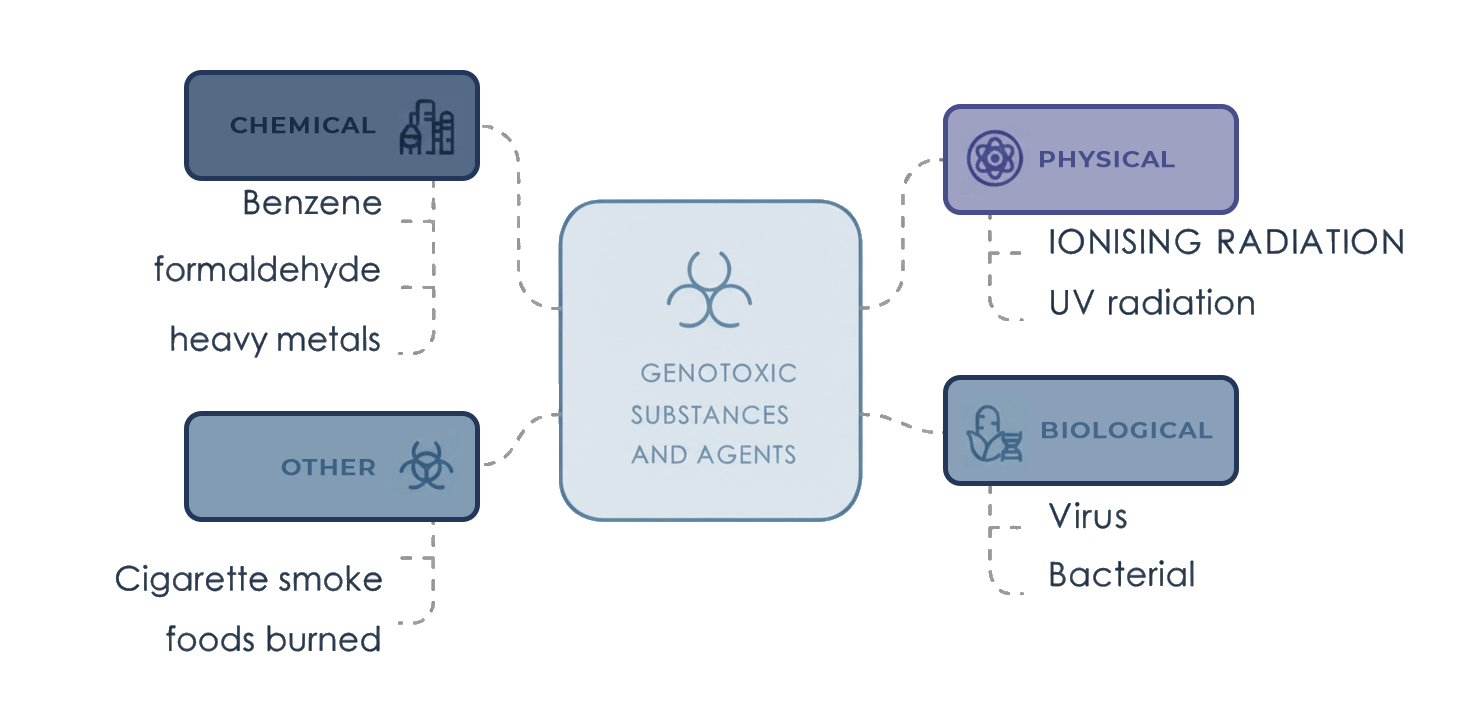
CHEMICAL – Benzene, formaldehyde, ethylene oxide, polycyclic aromatic hydrocarbons (PAHs), aflatoxins, nitrosamines, heavy metals (e.g., lead, cadmium, mercury), pesticides (e.g., herbicides, insecticides), and chemotherapeutic agents. PHYSICAL – Ionising radiation (X-rays, gamma rays, etc.) and ultraviolet (UV) radiation. BIOLOGICAL – Viruses (e.g., hepatitis B virus, human papillomavirus), bacteria (e.g., Helicobacter pylori). OTHER SOURCES – Cigarette smoke and foods that are charred or cooked at excessively high temperatures.
DNA damage resulting from genotoxic exposure may lead to a wide array of health consequences, including:
Genetic Mutations
Cellular Damages
Stem Cell Depletion
Chronic Diseases
Hereditary Diseases
Accelerated Ageing
Reproductive Issues
Immune Dysfunction
Neurological Issues
Cardiovascular Risks
Respiratory Problems
Digestive Disturbances
Impact on Stem Cells
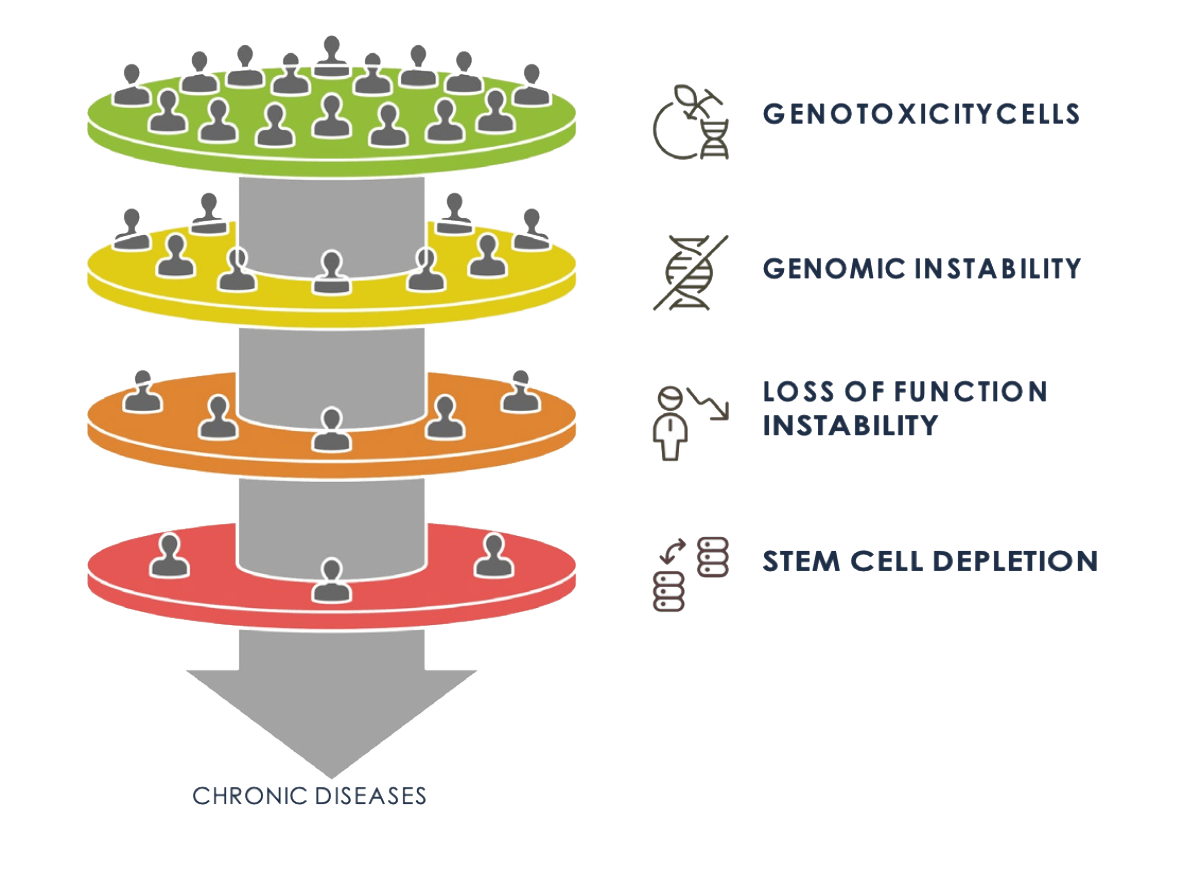
Stem cells, which are essential for tissue regeneration and maintenance, are particularly vulnerable to oxidative damage and genomic instability. Mutations and alterations in their DNA can lead to:
- Loss of functionality – Damaged stem cells lose their ability to self-renew and to differentiate correctly.
- Depletion of the stem cell pool – Cumulative damage can reduce the reservoir of regenerative cells, impairing the body’s ability to repair tissues.
- Development of chronic diseases – The accumulation of genetic errors may promote the onset of degenerative, autoimmune, or cancerous diseases.
Oxidative Damage and Systemic Inflammation
Low-grade chronic inflammation, also known as systemic inflammation, is closely associated with oxidative damage.
This type of inflammation is characterized by a persistent but mild activation of the immune system, often triggered by factors such as obesity, stress, chronic infections, or exposure to environmental toxins.
Chronic oxidative damage initiates a dysfunctional inflammatory response, creating a vicious cycle: oxidative damage fuels inflammation, and inflammation generates further free radicals. This interaction between oxidative damage and low-grade chronic inflammation is one of the leading contributors to long-term health deterioration.
The level of systemic inflammation can be easily detected through the CYTOXPACE test.
Measuring the accumulation of genotoxicity in the human body offers several advantages in the prevention of ageing and age-related diseases, including:
ADVANTAGES OF GENOTOXICITY MEASUREMENT
Early identification of DNA damage
Genotoxicity measurement enables the detection of DNA damage before symptoms or diseases appear. This allows for timely intervention with preventive strategies to slow the accumulation of further damage and reduce the risk of disease development.
Individual Risk Assessment
Measuring genotoxicity helps assess an individual’s risk of developing age-related conditions such as cancer, cardiovascular disease, and neurodegeneration. This supports the personalisation of preventive strategies based on each person’s risk profile.
Evaluating Intervention Effectiveness
Measuring genotoxicity over time allows the evaluation of the effectiveness of preventive measures, such as lifestyle changes, dietary supplements, or pharmacological treatments. This enables the adaptation of strategies based on individual responses.
Motivation for Lifestyle Change
Being aware of one’s level of DNA damage encourages the adoption of a healthier and more conscious lifestyle, helping to prevent long-term cellular damage by reducing exposure to risk factors such as smoking, pollution, and UV radiation.
Comprehensive Analysis
| BIOMARKER | REFERENCE VALUE |
| 8-OHdG concentrazione (media) | 0,94 – 60 ng/dl |
| OPTICAL DENSITY | 0.0 – 2.5 nm |
Why GENOXPACE
Discover all the advantages of measuring the level of the biomarker 8-OHdG
8-OHdG as
| Prevention and management of cancer risk |
| Monitoring in cardiovascular diseases |
| Assessment of risk for neurodegenerative diseases |
| Monitoring in metabolic diseases |
| Evaluation in environmental exposure contexts |
| Monitoring of ageing |
8-OHdG to understand
| Oxidative DNA damage (such as 8-OHdG) is associated with the risk of genomic mutations and tumor development. |
| Oxidative stress contributes to endothelial dysfunction and the progression of cardiovascular conditions (hypertension, atherosclerosis, myocardial infarction). |
|
Oxidative stress and DNA damage are implicated in the pathogenesis of
neurodegenerative diseases (Alzheimer’s, Parkinson’s, ALS). |
|
8-OHdG is a useful biomarker for tracking oxidative damage associated with chronic hyperglycemia and diabetic
complications (nephropathy, retinopathy). |
| Exposure to environmental or occupational factors may increase oxidative stress and DNA damage (cigarette smoke, air pollutants, heavy metals, radiation). |
| Ageing is associated with increased oxidative stress and a decline in DNA repair capacity. |
8-OHdG for the purpose of
| To identify potential DNA damage and assess oncological risk. |
| To monitor oxidative stress and prevent cardiovascular diseases. |
| To assess DNA damage in patients with or at risk of neurodegenerative conditions. |
| To monitor oxidative damage in individuals with diabetes or other metabolic diseases. |
| To assess the impact of such exposures and the associated long- term DNA damage risk. |
| To monitor ageing-related changes and support strategies to slow them down. |
EXTENDED DIAGNOSTIC PROTOCOL
As part of an integrated approach, it is recommended to complement the analysis of systemic inflammation with the following tests, which form the BIOXPACE protocol :
SENEXPACE
SENEXPACE – analyses cellular senescence, a natural defence mechanism that prevents the uncontrolled proliferation of cells with damaged DNA and, consequently, high tumourigenic potential. Senescent cells release inflammatory signals that generate and spread inflammation throughout the body, thereby triggering systemic inflammation.
CYTOXPACE
CYTOXPACE – assesses key markers of systemic inflammation that, when altered, are associated with accelerated aging processes, increased genotoxicity, and genomic instability, conditions that increase the risk of disease onset.
IMMUNEXPACE
IMMUNEXPACE – evaluates the balance and effectiveness of the immune system in carrying out its functions. The immune system helps counteract systemic inflammation by eliminating senescent cells that fuel inflammatory processes. When the immune system is weakened, these cells are not adequately removed and therefore accumulate in tissues, contributing to chronic inflammation.
GUTXPACE
GUTXPACE – analyses the gut microbiome to identify and characterize the microorganisms present in the intestinal tract. The balance of intestinal bacteria is one of the main modulators of immune responses. Gut health directly influences the effectiveness of the immune system, including its ability to clear senescent cells that drive systemic inflammation.(LINK)
NANOXPACE
NANOXPACE – detects and quantifies nano- and microplastics in the bloodstream. The immune system recognizes these foreign substances, triggering an inflammatory response. The progressive accumulation of nano/microplastics contributes to genotoxicity and therefore genomic instability, which in turn accelerates degenerative processes and ageing.
Ready to Take the Next Step?
Your journey to better health starts with a simple conversation
Our team of medical experts and dedicated patient coordinators is here to guide you every step of the way. From your initial consultation to post-treatment follow-up, we provide personalized support tailored to your unique needs.
Schedule a free consultation today and discover how our advanced treatments can help you achieve your health goals.
Scientific content reviewed by the Bioscience Institute Scientific Board. · Last updated
The information on this page is for general education and does not replace a consultation with a physician.