



Advanced genomic analysis to monitor DNA stability and detect early signs of genome instability, supporting preventive and personalized health strategies.
HELIXBALANCE by Bioscience Institute is an advanced genomic test designed to detect and monitor genome instability — one of the earliest biological signals associated with aging, oxidative stress, and chronic degenerative diseases.
By identifying somatic mutations in tumor suppressor genes, HELIXBALANCE provides key insights into the body’s ability to maintain DNA integrity and repair mechanisms, supporting preventive strategies to preserve long-term health.
Why Perform the HELIXBALANCE Test
Genome instability develops when tumor suppressor genes — which normally regulate cell growth and DNA repair — are altered.
As a result, somatic mutations accumulate, increasing susceptibility to chronic diseases, cancer, and accelerated aging.
By monitoring these genetic variations, HELIXBALANCE helps detect the early signs of reduced genomic maintenance, enabling such as lifestyle optimization, antioxidant intake, and targeted nutritional support.
What the Test Evaluates
The HELIXBALANCE test analyzes a panel of 28 genes involved in the maintenance of genomic integrity, focusing on those responsible for DNA repair, cell cycle regulation, and cellular response to oxidative and metabolic stress.
Using Next Generation Sequencing (NGS), the analysis detects and monitors somatic mutations that may contribute to genome instability — a condition linked to aging, environmental exposure, and impaired cellular repair mechanisms.
Among the genes analyzed are TP53, MLH1, MSH2, ATM, CHEK2, BRIP1, and others that play essential roles in protecting DNA from damage and preserving its stability over time. Alterations in these genes can indicate a reduced DNA-repair capacity and an increased susceptibility to mutational accumulation.
The resulting genomic stability profile offers an early insight into potential cellular imbalances and provides a foundation for developing personalized prevention strategies, including targeted nutritional support and lifestyle optimization.
Panel of 28 genes analyzed by the HELIXBALANCE test
| APOBEC3B | AXIN1 | CHEK2 | MSH2 |
| ARID1A | BARD1 | CTNNB1 | MSH6 |
| ARID1B | BLM | DICER1 | NFE2L2 |
| ARID2 | BRIP1 | FANCD2 | PMS2 |
| ATM | BUB1B | FOXA1 | RAD21 |
| ATR | CDK12 | KMT2D | RECQL4 |
| ATRX | CDKN2A | MLH1 | TP53 |
How the Test is Performed
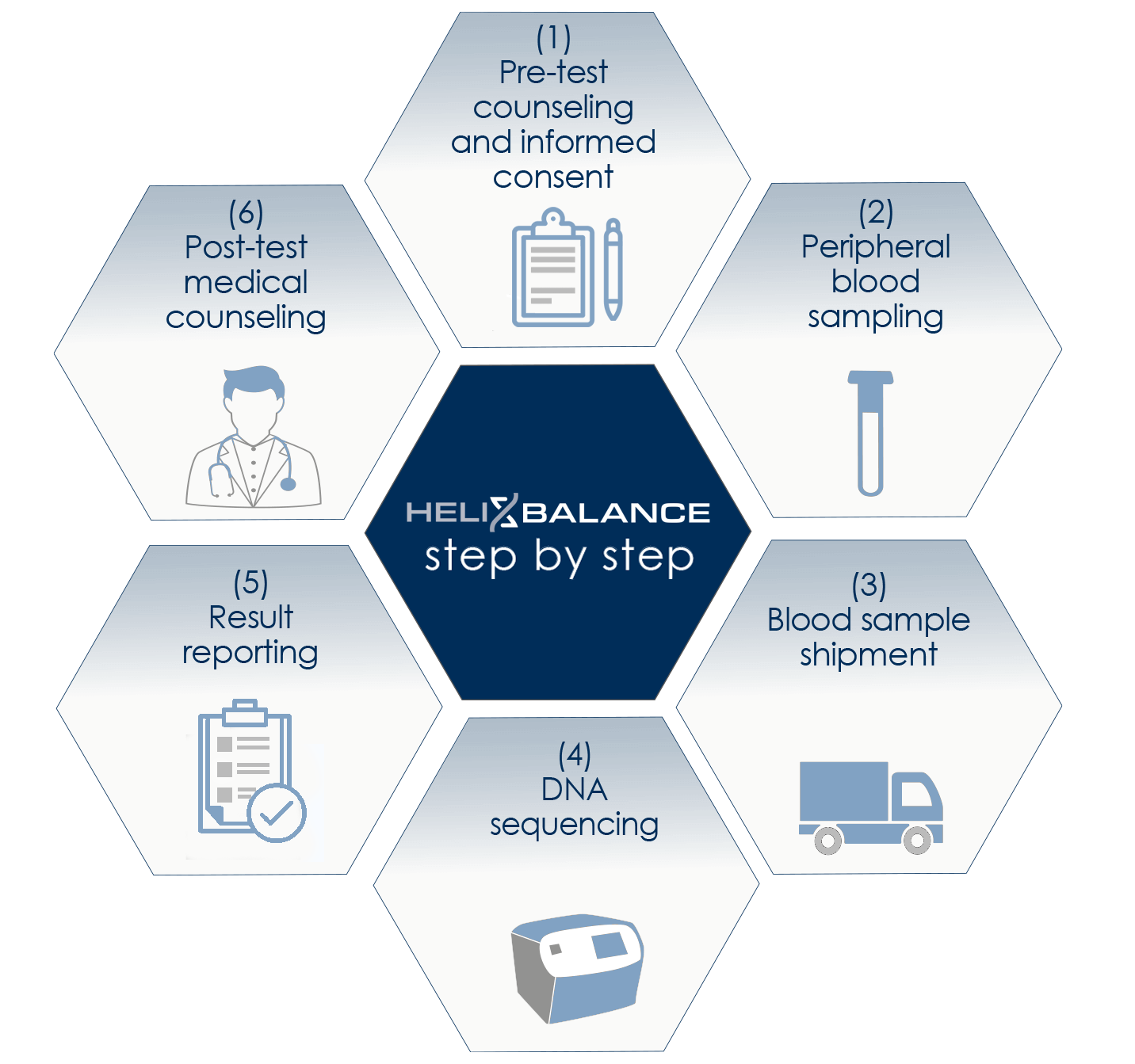
The HELIXBALANCE process follows a clear and standardized workflow, as illustrated in the Step by Step chart:
- Pre-test counseling and informed consent – preliminary discussion with medical staff to assess suitability and explain test implications.
- Peripheral blood sampling – a simple, minimally invasive blood draw performed at Bioscience Institute centers or by the referring physician.
- Sample shipment – the collected sample is safely shipped to the Institute’s laboratories.
- DNA sequencing – genomic DNA is extracted and analyzed using Next Generation Sequencing (NGS) technologies.
- Result reporting – the laboratory generates a detailed report summarizing detected genetic variations and their potential significance.
-
Post-test medical counseling – results are reviewed with a qualified specialist to discuss findings and define possible nutritional or lifestyle interventions.
Test results are typically available within 30 working days.
In-depth Information
Would you like to explore further or learn more? Access comprehensive explanations by expanding the sections below.
WHY ARE THESE 28 GENES ANALYZED?
The HELIXBALANCE panel includes 28 genes that play essential roles in maintaining genomic integrity.
These genes are involved in DNA repair, cell cycle control, and the cellular response to oxidative and metabolic stress.
Alterations in these genes can compromise the ability to repair DNA damage, leading to genomic instability.
WHAT DOES THE PRESENCE OF A MUTATION INDICATE?
A detected mutation does not represent a diagnosis of disease.
Instead, it signals that certain cellular mechanisms—particularly those responsible for DNA repair and genomic stability—may be under stress or functioning less efficiently.
This information helps clinicians and researchers identify individuals who could benefit from preventive or supportive interventions.
HOW CAN THIS INFORMATION BE USED?
The results of HELIXBALANCE can guide personalized strategies aimed at preserving genome stability.
This may include lifestyle adjustments, antioxidant optimization, and nutritional plans rich in vitamins and compounds that support DNA repair pathways.
Ready to Take the Next Step?
Your path to better long-term health starts with understanding what’s happening inside your body.
Our specialists and scientific advisors are here to guide you from test selection to result interpretation, offering clear insights into your microbiome balance, chronic inflammation markers, genetic predispositions, and more. We provide personalized support tailored to your wellness goals.
Book your free consultation today and discover how our advanced molecular tests can help you take control of your health with confidence and clarity.
Scientific content reviewed by the Bioscience Institute Scientific Board. · Last updated
The information on this page is for general education and does not replace a consultation with a physician.