


Not sure where to start?
Tell us what you are looking for. Our specialists will review your request and suggest the right clinic for you.
In the exosome therapy vs PRP choice, PRP (platelet-rich plasma) concentrates the growth factors already present in your own blood, while exosomes are laboratory-purified vesicles from mesenchymal stem cells that carry a broader set of repair signals. PRP has the longer track record and more published trials for hair loss; exosomes need no blood draw, come as a tested and consistent preparation, and are often chosen for hair and skin when PRP results have levelled off.
Both work by signalling to your own cells rather than by adding new tissue. Below we compare exosomes vs PRP criterion by criterion; for the full background on exosomes, start with our exosome therapy guide.
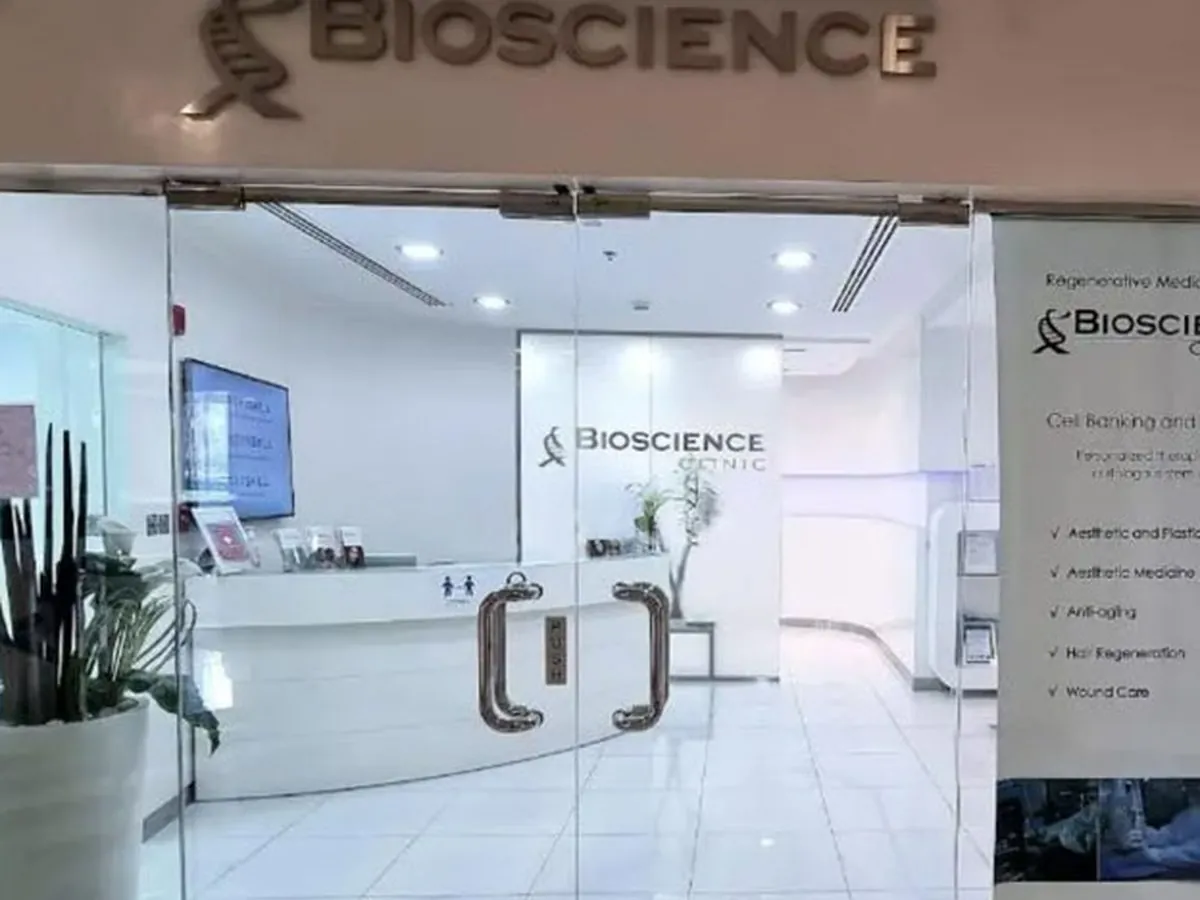
Bioscience Institute has run GMP-certified cell laboratories since 2007, with a cell factory and clinic in Dubai Healthcare City, and produces clinical-grade exosomes from adipose-derived mesenchymal stem cells.
Exosomes vs PRP at a glance
| Criterion | Exosomes | PRP |
|---|---|---|
| What it is | Nano-sized vesicles (about 30 to 150 nanometres) released by mesenchymal stem cells, carrying proteins, lipids, growth factors and RNA | Plasma from your own blood with the platelets concentrated well above normal blood levels |
| Source | Produced in a GMP laboratory from cultured stem cells, then isolated and tested | Your blood, drawn and centrifuged on the day of treatment |
| How it works | Delivers signalling cargo that calms inflammation, supports new blood vessels and switches on repair in resident cells | Platelets release growth factors that stimulate blood flow, cell growth and collagen |
| Suited to | Hair thinning, skin quality, scars, recovery after microneedling or laser, patients who want no blood draw | Early androgenetic alopecia, skin texture, patients who want a product made only from their own blood |
| Sessions | A short initial course set by the specialist, then maintenance | Usually three to four sessions about a month apart, then maintenance |
| Downtime | Typically none after microinjections | Little or none; adds a blood draw and a day or two of scalp tenderness |
| When results show | Skin within weeks; hair over about three months | Skin within weeks; hair over about three months |
| Typical cost | Higher; 2026 Dubai price pages from about AED 999 (package) to AED 2,000 to 5,000 per session | Generally the lower-cost option per session; depends on the kit, the area and the course |
| Evidence base | Newer; promising but smaller clinical studies | Longer; randomised trials and meta-analyses, mainly for hair loss |
How do exosomes and PRP work?
Exosomes and PRP both deliver signals that tell tired cells to repair, but the signals come from different sources. PRP is made by drawing a small amount of your blood and spinning it in a centrifuge so that the platelets collect in a small volume of plasma. Once injected, the platelets release growth factors such as PDGF, VEGF and TGF-beta, which stimulate local blood flow, cell proliferation and collagen production.
Exosomes are extracellular vesicles that mesenchymal stem cells release to communicate with other cells. They carry proteins, lipids, growth factors, cytokines and nucleic acids such as messenger RNA and microRNA. When a target cell takes them up, this cargo can change how the cell behaves: it can reduce inflammation, encourage new blood vessels and activate repair programmes.
Why the signal is different
PRP is a snapshot of what your platelets hold on the day, dominated by platelet growth factors. Exosomes reflect what stem cells release when they coordinate repair, including regulatory microRNAs and immunomodulatory signals: a broader, more instructive signal.
Source and preparation: your blood or a laboratory product
PRP is fully autologous: it comes from you, it is prepared in the treatment room and it is used in the same session. Its strength is that nothing from outside your body is injected. Its weakness is variability, because your platelet count, the preparation kit, your age, your general health and some medicines all change what ends up in the syringe.
Exosomes are produced in a laboratory from cultured mesenchymal stem cells, then isolated, characterised and tested. At Bioscience Institute they are derived from adipose-derived mesenchymal stem cells (ADMSC), and every batch is screened for sterility, safety and endotoxins before use. No blood draw is needed, and every session uses a preparation of known origin and quality.
Source matters among exosome products too: plant-derived "exosomes" in many cosmetics are a different material from human stem cell exosomes. Ask what you are being given and where it was made.
Exosomes vs PRP for hair loss: which is better?
For early androgenetic alopecia, PRP has more published evidence, while exosomes are the newer option that many patients choose when PRP has stopped giving visible gains or when they prefer not to have blood drawn. Randomised trials and meta-analyses indexed on PubMed report that PRP can increase hair density in androgenetic alopecia, although protocols and results vary widely between studies. Clinical studies of exosomes for hair are more recent and smaller, so the evidence is promising but less mature.
Exosomes act on several steps of the hair cycle at once. They can activate hair follicle stem cells, support the anagen (growth) phase, promote new blood vessels around the follicle and reduce inflammation in the scalp. This is why they are used for androgenetic alopecia in men and women, and why they are studied in alopecia areata, the autoimmune form of patchy hair loss.
Both treatments only work where follicles are still alive. Neither regrows hair on scalp that has been smooth for years; there, a hair transplant is usually the realistic option, and a regenerative treatment can help prepare the scalp before and after surgery.
What happens on the scalp
Our page on exosome treatment for hair loss explains the EXOHAIR session step by step. If you want to compare an option based on your own cells, see stem cell treatment for hair loss (HAIRSKILL), which uses mesenchymal stem cells from a small sample of your fat.
Exosomes vs PRP for the face and skin
For skin quality, exosomes are often chosen because they combine collagen stimulation with an anti-inflammatory effect that supports recovery after microneedling, laser or peels. PRP, which becomes the so-called vampire facial when combined with microneedling, also stimulates collagen and improves texture and tone, and it remains a sound option for patients who want a product made only from their own blood.
Exosomes are used for fine lines, rough texture, enlarged pores, uneven tone, acne scars and stretch marks, delivered by microinjection, mesotherapy, cannula or after microneedling.
More on facial treatment: exosomes for skin and, for scars specifically, exosome treatment for scars and stretch marks.
Sessions, downtime and when results show
- PRP sessions: for hair, usually an initial course of three to four sessions about a month apart, followed by maintenance every few months.
- Exosome sessions: the specialist sets the protocol after examining the scalp or the skin. A short initial course is usually followed by maintenance; the number depends on the area, the degree of thinning or ageing and how you respond.
- Downtime: exosome microinjections typically need no downtime. PRP also has little downtime, but it adds a blood draw and the scalp can feel tender for a day or two. After microneedling with either product, expect redness that settles within a few days.
- Results: changes in skin texture and radiance may be noticed within weeks. Hair follows its growth cycle: shedding usually slows first, new growth becomes visible over about three months, and a fair judgement is possible at around six months.
Side effects and safety
Both are minimally invasive and generally well tolerated when a qualified physician uses a sterile technique. The common effects are the same: temporary redness, swelling, tenderness and small bruises at the injection points.
PRP
Because PRP comes from your own blood, allergic reactions are very unlikely. It is not suitable for people with platelet or clotting disorders, active infection or active cancer, and anyone taking blood thinners should discuss them with the doctor first.
Exosomes
Exosomes are cell-free: they cannot divide or form tissue, and stem cell exosomes have low immunogenicity. The main safety question is the product itself: its cell source, how it was manufactured and whether each batch was tested for sterility and endotoxins. Pregnancy, active infection and active cancer are usual reasons to postpone treatment.
Our guide Is stem cell therapy legal in the UAE? explains who regulates these treatments in the Emirates, and how to choose a stem cell clinic lists the checks to make before you book.
Cost: which is cheaper, exosomes or PRP?
PRP is generally the cheaper option per session, because it uses your own blood and a single-use preparation kit. Exosomes cost more because they are a laboratory product with manufacturing and testing behind every vial. Public price pages of Dubai clinics (October 2026) show exosome treatment from about AED 999 for a hospital package to AED 2,000 to 5,000 per session.
Compare the cost of the full course, not of one session. The total depends on the number of sessions and maintenance, the area treated, the product (cell source, dose, testing documents), any combined procedure such as microneedling, and the physician and facility.
For a wider view of regenerative treatment prices, see stem cell therapy cost in Dubai.
When does combining exosomes and PRP make sense?
Combining exosomes and PRP makes sense when you want the autologous growth factors of PRP and the broader signalling of exosomes in the same plan, for example when hair thinning has responded only partly to PRP alone. Clinics combine them in three common ways:
- In the same session: PRP injected first, exosomes applied with microneedling.
- Across a course: PRP for the initial sessions, exosomes for maintenance, or the reverse.
- After resurfacing: microneedling, fractional laser or a peel followed by exosomes to support recovery, with or without PRP.
Direct comparisons of combined protocols with either treatment alone are still limited, so a combination should follow from your assessment.
Who should choose which?
Choose PRP for early thinning if you want the most studied, fully autologous option; choose exosomes if you want no blood draw, a consistent product or better skin recovery.
PRP may suit you if
- your thinning is early and you want the option with more published studies;
- you prefer a product made only from your own blood;
- you are comfortable with a blood draw at every session;
Exosomes may suit you if
- you want no blood draw;
- PRP gave limited results or the improvement has levelled off;
- your own platelets may be a weaker source because of age, general health or certain medicines;
- your goal is skin quality or faster recovery after resurfacing;
Consider stem cells if
Thinning is more advanced but follicles are still present, or you want a longer-lasting regenerative effect from your own cells. Read exosomes vs stem cells and stem cells vs PRP for the next step of the comparison.
FAQ
Which is better for hair loss, exosomes or PRP?
PRP has more published trials for androgenetic alopecia, so it is a sound first option for early thinning. Exosomes are a strong alternative when PRP results level off, when you prefer no blood draw or when your own platelets are a weaker source. Both need living follicles to work.
Is exosome therapy better than PRP for the face?
For skin quality, exosomes are often chosen because they combine collagen stimulation with an anti-inflammatory effect that supports recovery after microneedling or laser. PRP also improves texture and tone and suits patients who want a product made only from their own blood.
Can exosomes and PRP be combined?
Yes. Clinics combine them in the same session, alternate them across a course, or use exosomes after resurfacing. Evidence on combined protocols is still limited, so the plan should follow your assessment.
How many sessions of exosomes or PRP do I need?
PRP for hair usually starts with three to four sessions about a month apart, then maintenance every few months. Exosome protocols are set by the specialist after examining your scalp or skin, with a short initial course and maintenance as needed.
Are exosomes safe?
Exosomes are cell-free and generally well tolerated; the usual effects are temporary redness, swelling and tenderness. Safety depends mostly on the product: its cell source, how it was manufactured and whether each batch was tested for sterility and endotoxins.
Are exosomes FDA approved?
No exosome product is approved by the US FDA for hair, skin or any other treatment, and the FDA has warned consumers about unapproved exosome products. PRP is prepared with FDA-cleared devices, and its use for hair loss is an established off-label practice.
Which is cheaper, exosomes or PRP?
PRP is generally cheaper per session because it uses your own blood and a single-use kit. Exosomes cost more because they are a laboratory product; 2026 Dubai price pages range from about AED 999 for a package to AED 2,000 to 5,000 per session.
Is there downtime after exosomes or PRP?
Usually very little. Exosome microinjections typically need no downtime, while PRP adds a blood draw and the scalp may be tender for a day or two. After microneedling with either product, redness usually settles within a few days.
Scientific content reviewed by the Bioscience Institute Scientific Board. · Last updated
The information on this page is for general education and does not replace a consultation with a physician.